
Energy IslandAn interactive renewable and non-renewable energy resources simulation for ages 11 to 14
Power an island with coal, sun, wind, water and batteries through calm days and storms, on a budget.
Part of Thinkodile Plus · about 40 minutes · plays in the browser
The mystery
My island's new solar farms make more electricity in a day than the whole town uses in a day. So can we close the coal power station tonight?
Every quest starts with a prediction. Lock yours in, then run the experiments to find out who was right.
What you’ll learn
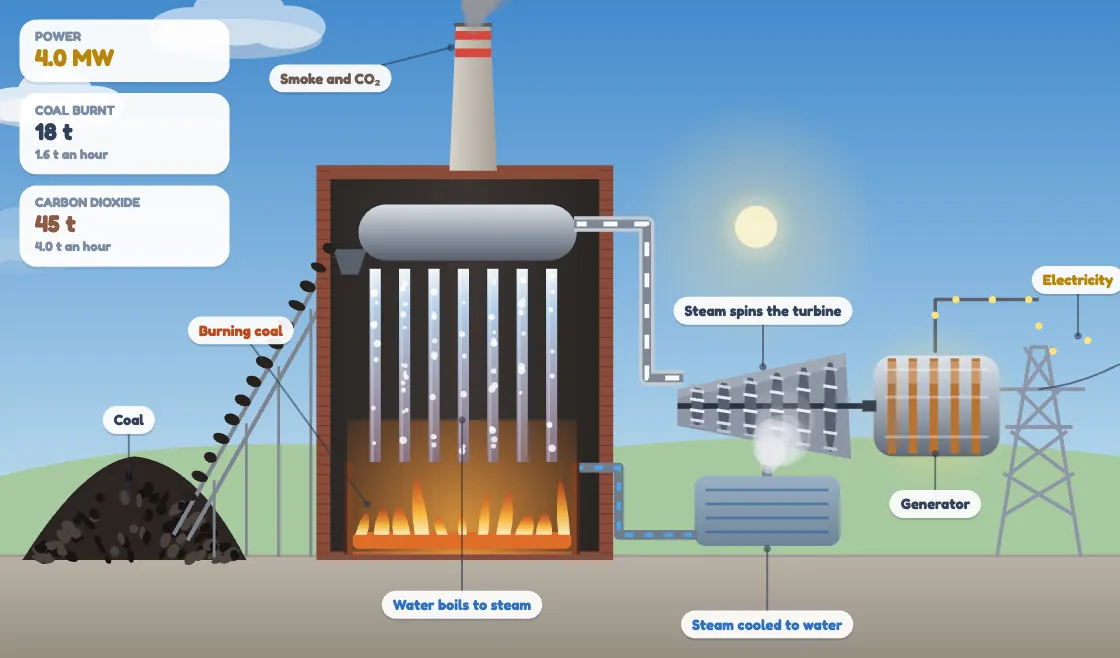
Spinning a generator
Most power stations spin a turbine joined to a generator. In a coal power station, burning coal boils water and the steam spins the turbine. Falling water spins one in a dam, and the wind turns a turbine's blades directly.
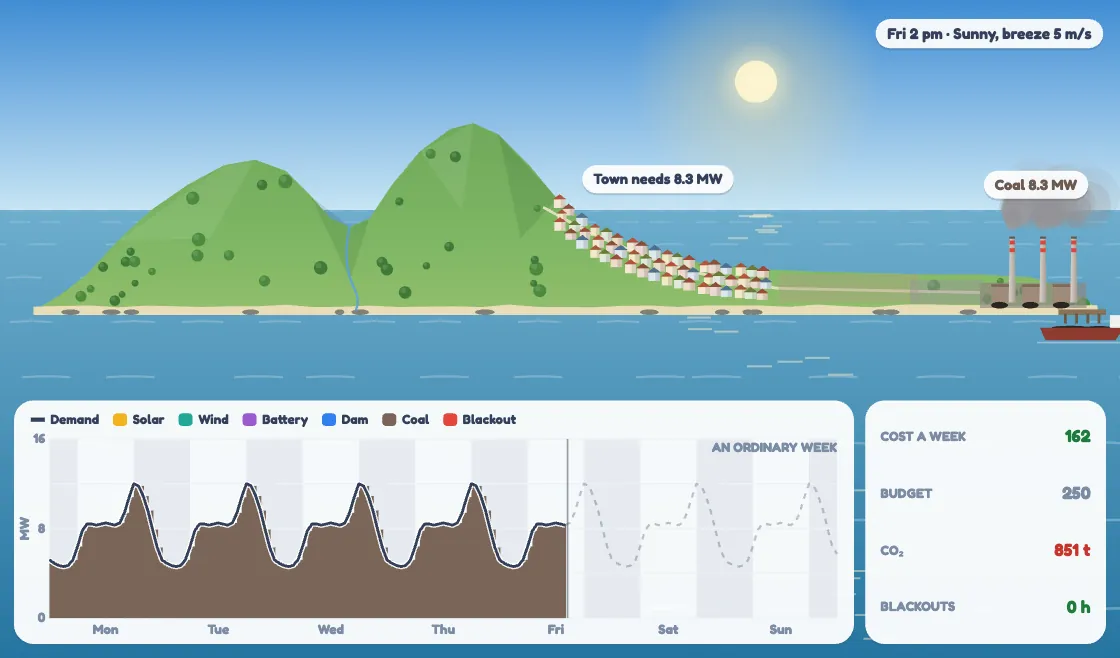
Fossil fuels
Coal, oil and natural gas formed from living things buried millions of years ago. They're non-renewable: once burnt, they're gone. Burning them gives out carbon dioxide, which warms the climate, and an island has to ship them in.
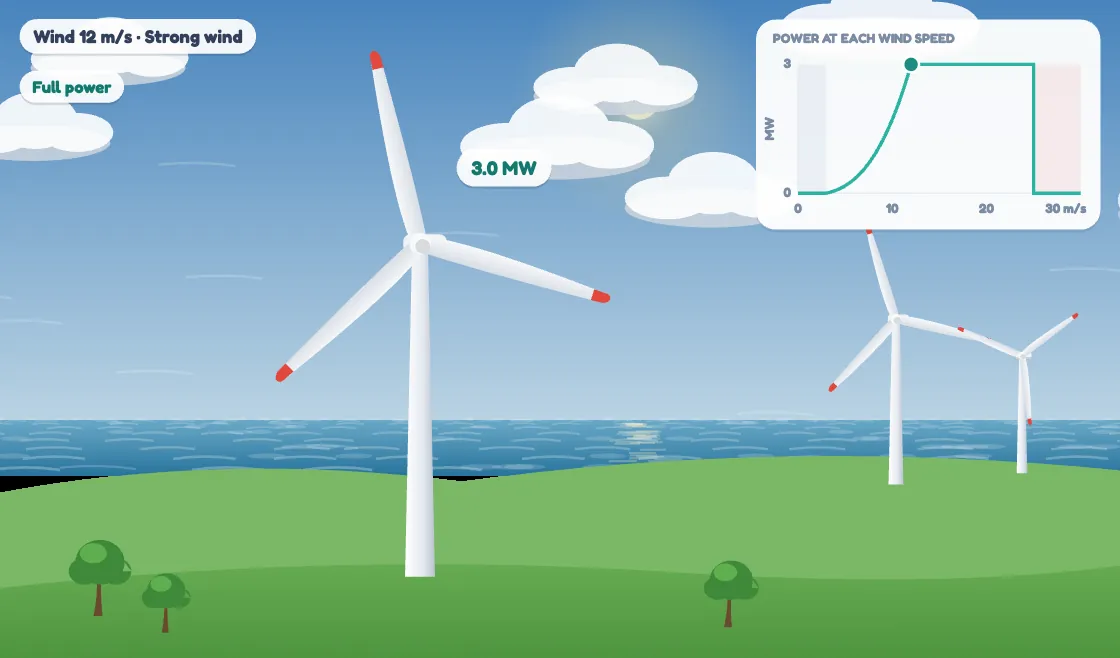
Sun and wind
Solar cells turn sunlight straight into electricity, with no moving parts, but they make nothing at night and less under cloud. A wind turbine needs a breeze: it makes nothing in still air, and shuts down in a storm to stay safe.
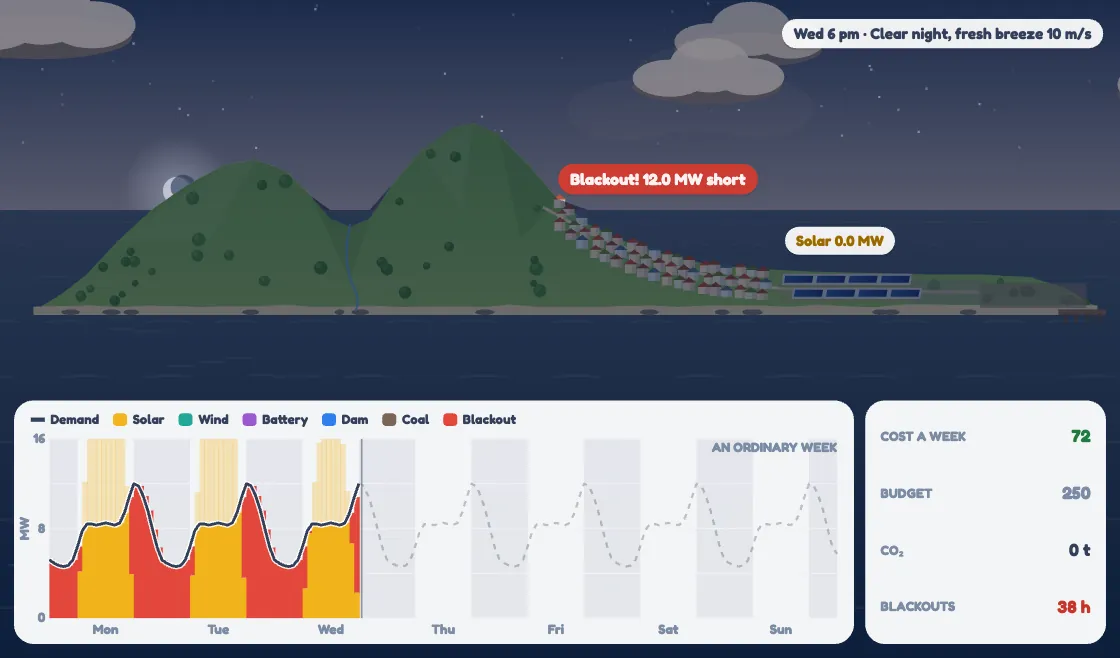
Demand
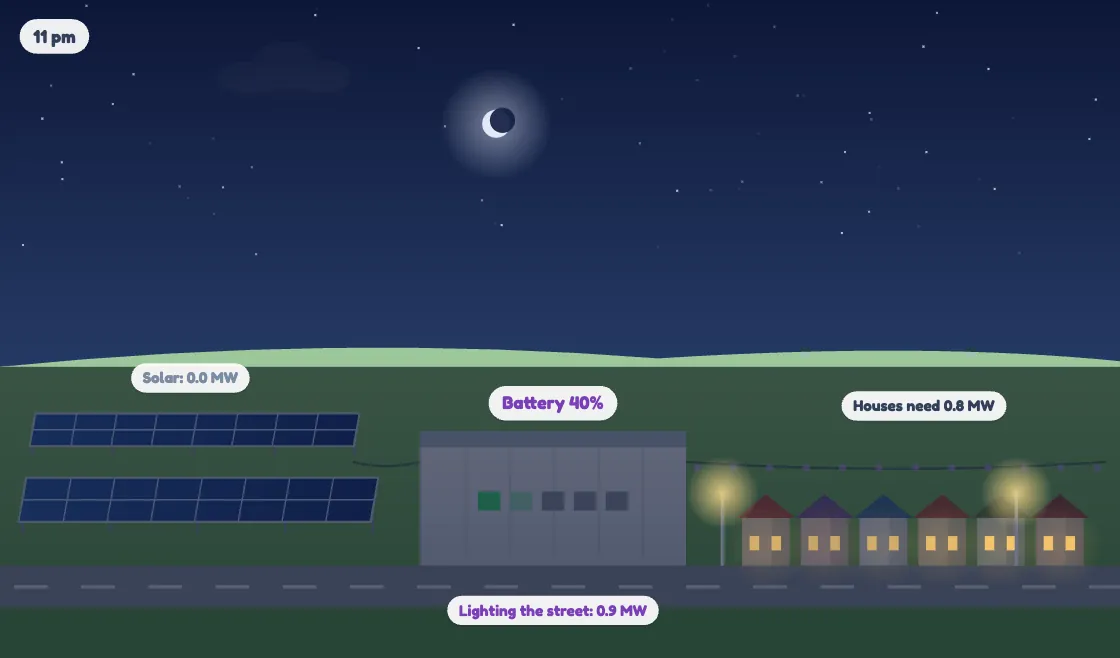
How much electricity a town needs changes through the day: least in the small hours, most in the early evening, when people get home, cook and switch on the lights. Supply must match demand every hour, or there's a blackout.
Storing energy
Batteries store spare electricity and give it back later, but they're costly and hold only a few hours' worth. A dam's lake is a store too: its water can make electricity whenever it's needed, until a dry season runs it low.
Weighing it up
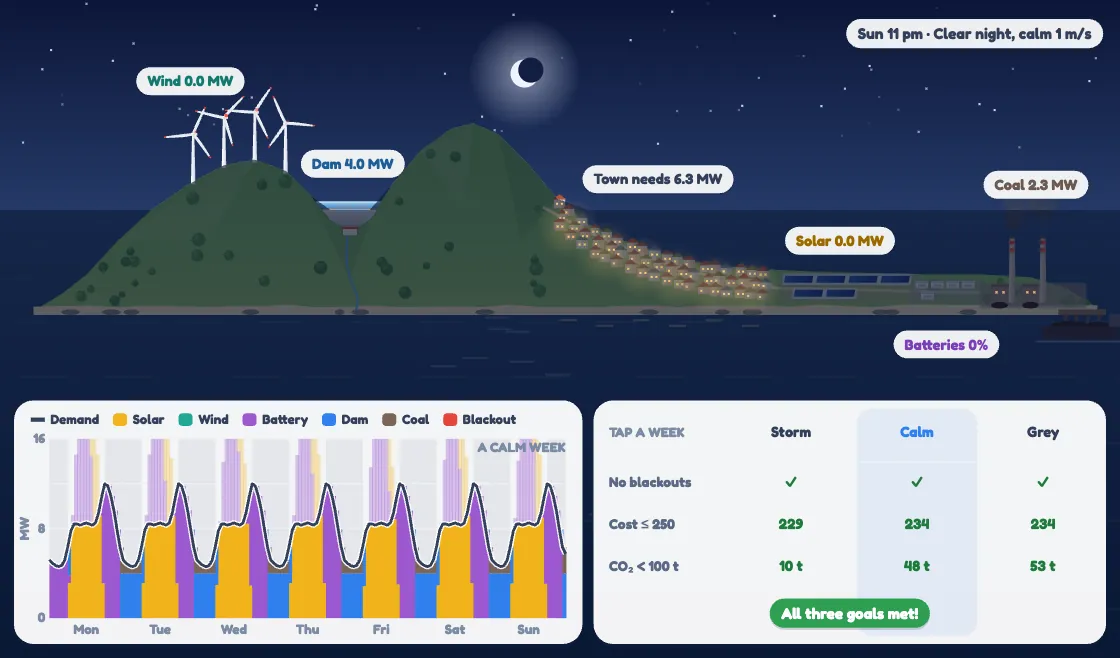
No source is best at everything. Coal is reliable but gives out carbon dioxide; sun and wind are clean but come and go. Engineers mix sources, add storage and keep a backup, then weigh reliability, cost and carbon dioxide.
Inside the lab
8 missions in 4 parts: How each one works, Keep the lights on, The island plan, Bonus. Each one is something to try for yourself, with the science behind it once you’ve done it.
- Steam powerLight the coal power station's fire and run it at full power.Burning coal heats water into high-pressure steam. The steam spins a turbine, and the turbine turns a generator. Every tonne of coal burnt gives out about 2.5 tonnes of carbon dioxide.
- Too much windTurn the wind up from calm to a storm, and watch what the turbine does.A turbine starts at about 3 m/s and gives full power from about 12 m/s. Above about 25 m/s it turns its blades edge-on and brakes, so a storm can't damage it.
- Blackout!Run a week on the island with only solar farms.Supply has to match demand every moment. When there isn't enough, part of the town has to be cut off: a blackout. The town needs most power in the early evening, just as the sun sets.
- No smokeKeep the lights on all week without burning any coal.Sun and wind often make more than the town needs. Batteries store that spare electricity and give it back in the evening, and the dam's lake keeps its water for when it's needed.
- Any weatherTest a plan that keeps the lights on through the stormy, the calm and the grey week.A storm shuts the turbines down, a calm week stops them, and a grey week dims the solar farms. Mixing sources means one can cover for another.
- The island planMeet all three goals at once: no blackouts, 250 coins a week at most, and under 100 tonnes of CO₂ in any week.Real grids are planned this way: a mix of sources, storage for the evening, and a backup that is rarely used. The coal plants can stand ready and still burn very little.
- Every sourceRun all five: coal, solar, wind, the dam (empty its lake in a dry season) and a battery.Coal can run any time. Sun and wind depend on the weather. A dam and a battery can store energy and give it back when it's needed, until they run out.
- No coal at allKeep the lights on through all three hard weeks without a single coal plant, whatever it costs.It can be done, but it takes a lot of solar farms, turbines and batteries, and costs more than the budget. As batteries get cheaper, plans like this are getting closer.
How the quest works
- Predict. Coco asks the mystery and you lock in an answer.
- Learn. A short, picture-led story of the big ideas (6 slides).
- Experiment. 8 missions in the lab, each one yours to try.
- Final Challenge. 8 questions that check you can use what you found, then the mystery’s answer.
For teachers
Present it live on the board while your class follows on their own screens. It fits one class period: about 7 minutes of Learn, 26 in the lab and 7 for the Final Challenge.
Students can
- describe how electricity is generated from coal (burning heats water into steam, which spins a turbine and generator), from wind, from falling water at a dam, and from sunlight in solar cells.
- sort energy resources into renewable and non-renewable, and give an advantage and a disadvantage of each, including reliability and carbon dioxide.
- read a graph of supply against demand over a week, explain why demand peaks in the early evening, and explain why a shortfall causes a blackout.
- design a mix of energy resources and evaluate it against competing criteria (no blackouts, cost and carbon dioxide), using storage and backup, and justify the trade-offs.
NGSS: HS-ESS3-2, HS-PS3-3, MS-ESS3-3, HS-ETS1-1, HS-ETS1-3, HS-ETS1-4.
Teacher notes for Energy IslandQuestions people ask
What is Energy Island?
Energy Island is an interactive renewable and non-renewable energy resources simulation from Thinkodile for ages 11 to 14. Power an island with coal, sun, wind, water and batteries through calm days and storms, on a budget. It opens with a mystery to predict, explains the big ideas in a short Learn story, lets you run the experiments yourself in the lab, and ends with a Final Challenge.
Is Energy Island free?
Energy Island is part of Thinkodile Plus for families and Teacher Pro for teachers. A free account includes 6 quests: Photosynthesis, Build a Cell, Build an Electromagnet, Particles in Motion, Dissolving, Moon Phases Explorer. A parent or teacher creates the account; children never sign up themselves.
How long does Energy Island take?
About 40 minutes for a class working through it together: around 7 minutes for the Learn story, 26 in the lab and 7 for the Final Challenge. At home you can stop and pick it up again later.
Which curriculum does Energy Island cover?
In the US it supports the Next Generation Science Standards HS-ESS3-2, HS-PS3-3, MS-ESS3-3, HS-ETS1-1, HS-ETS1-3, HS-ETS1-4. It's organised by topic, not by grade, so it fits other syllabuses too.
Does Energy Island work on phones, tablets and Chromebooks?
Yes. It runs in the web browser on laptops, Chromebooks, tablets and phones, with nothing to install. On a phone the lab plays sideways, so turn the phone on its side.