
Heart & BloodAn interactive 3D heart and circulatory system simulation for ages 11 to 14
Open a beating heart, ride a red blood cell round your whole body, then make it race.
Part of Thinkodile Plus · about 38 minutes · plays in the browser
The mystery
One red blood cell leaves your heart. It goes all the way round your body and gets back to the same spot. How many times did it go through your heart on the way?
Every quest starts with a prediction. Lock yours in, then run the experiments to find out who was right.
What you’ll learn
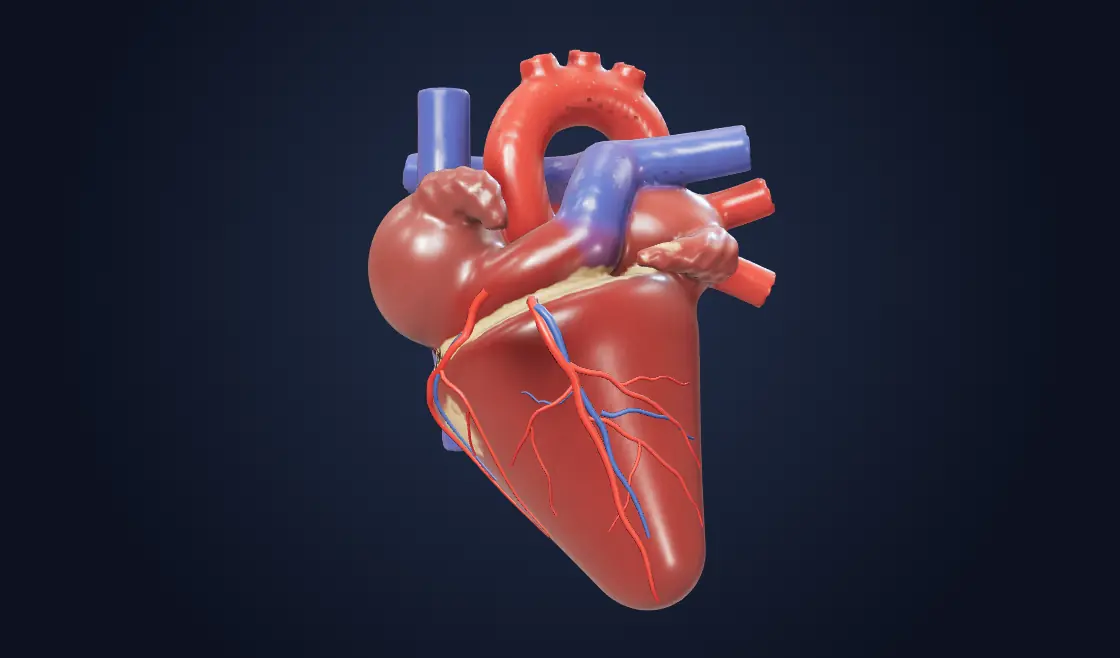
A pump made of muscle
Your heart is a muscle about the size of your fist, beating around 100,000 times a day. Its own muscle needs feeding too: the coronary arteries on its surface bring it oxygen and glucose.
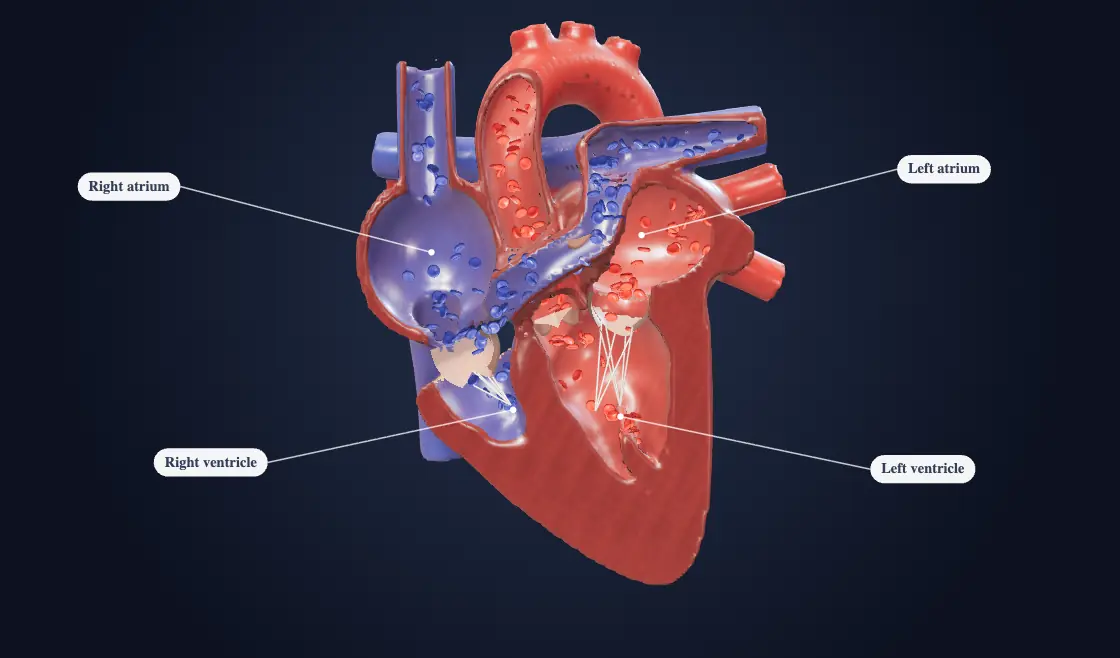
Four rooms
Two atria take blood in. Two ventricles pump it out. The septum keeps the two sides apart, and valves make sure blood only goes one way. Left and right mean the person's own, so they swap when you face a diagram.
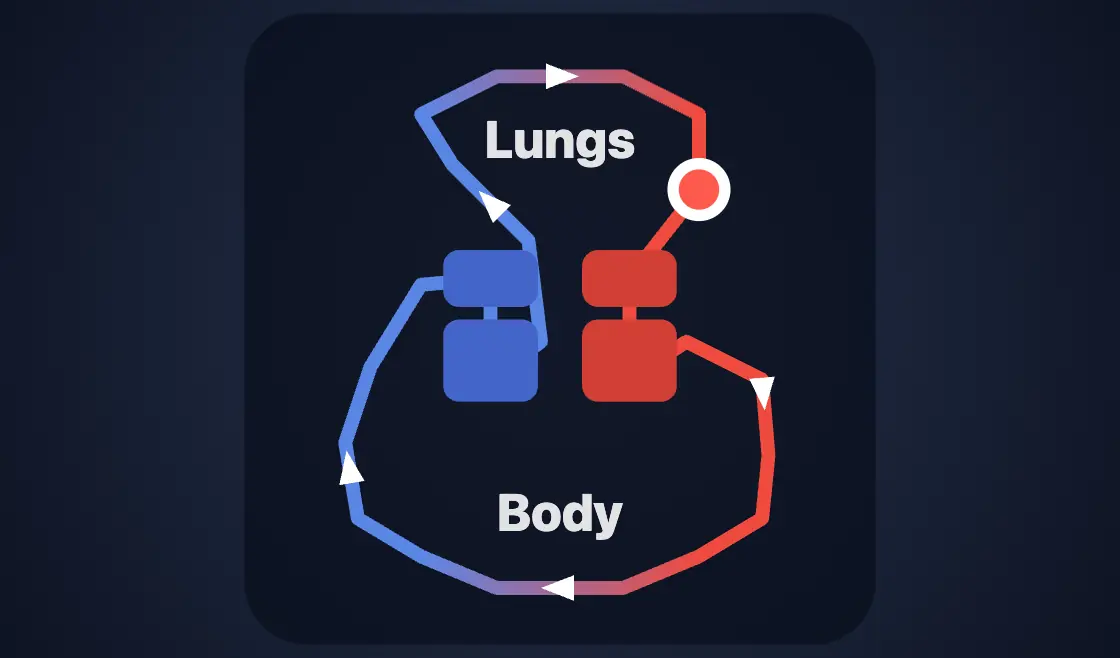
Two loops
The right side pumps blood to the lungs to collect oxygen. It comes back, and the left side pumps it round the body. So blood goes through the heart twice on each lap. That's called a double circulation.
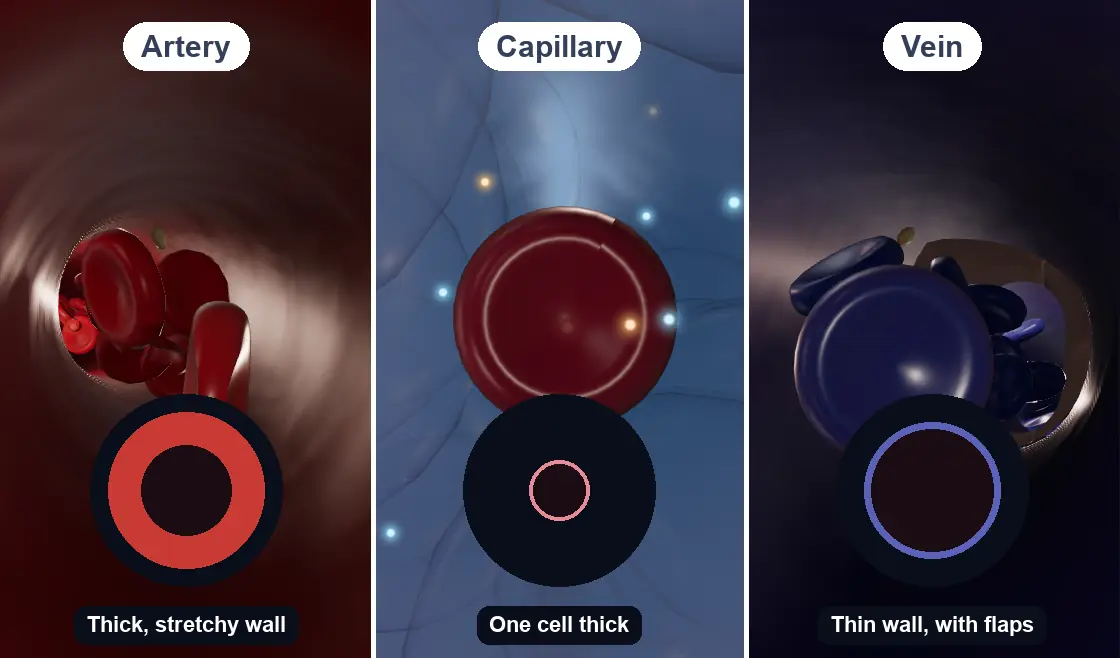
Three kinds of pipe
Arteries carry blood away from the heart, with thick, stretchy walls for the pressure. Capillaries are one cell thick, so things can cross. Veins bring blood back, with thin walls and flaps to stop it slipping back.
What's in blood
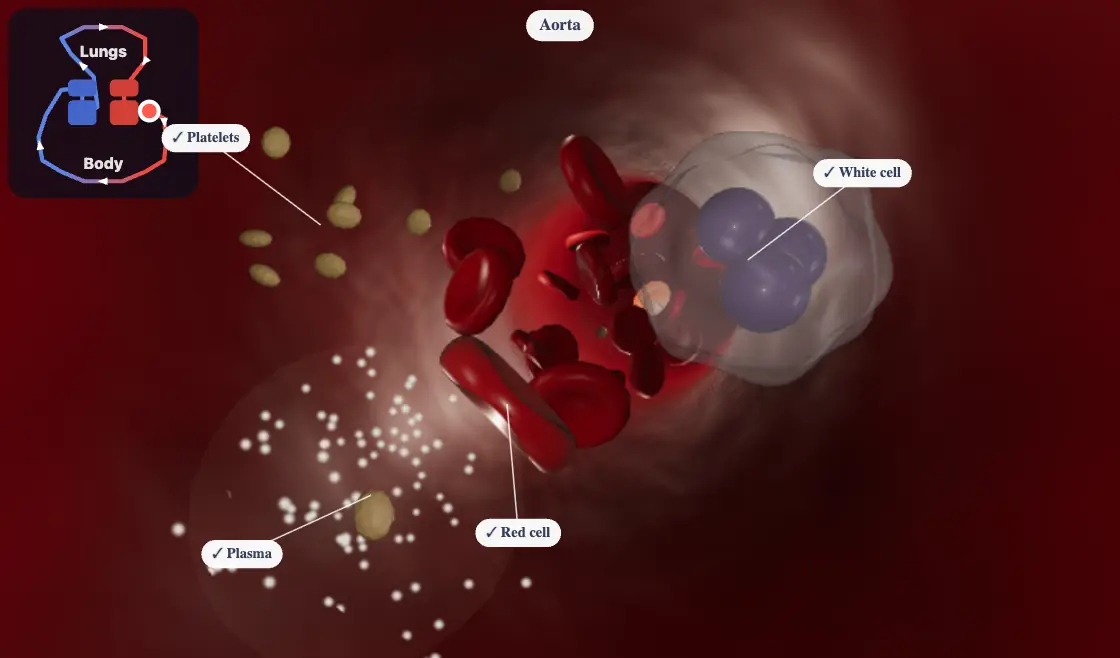
Plasma is the liquid. Red cells carry oxygen using haemoglobin. White cells fight germs. Platelets help clots form. Blood is always red: diagrams only colour the low-oxygen side blue so you can follow it.
Faster when you need it
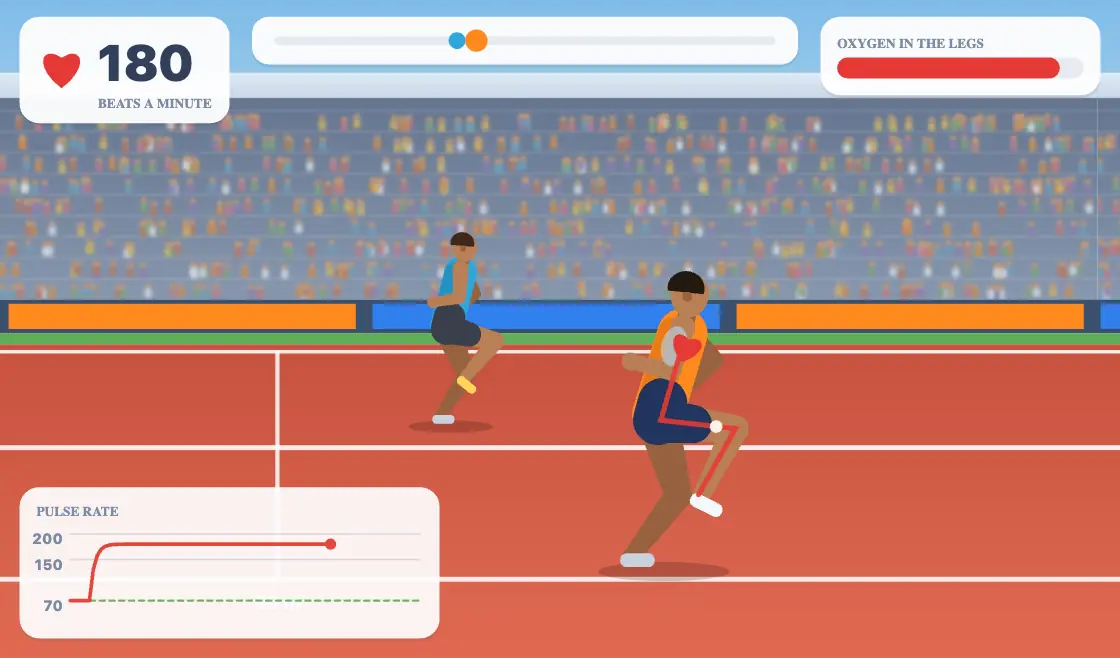
Exercise makes muscles use oxygen and glucose faster, so your brain speeds up your heart and your breathing. Your pulse, the wave you can feel in your wrist, shows how fast it's going.
Inside the lab
10 missions in 4 parts: Open the heart, Ride the blood, Make it race, Bonus. Each one is something to try for yourself, with the science behind it once you’ve done it.
- Four roomsOpen the heart and tap all four rooms.A heart has four chambers. Two atria on top take blood in, and two ventricles below pump it out. A wall called the septum keeps the right side's blood apart from the left side's.
- The strong sideFind the room that pumps blood round the whole body.The left ventricle has to push blood all round the body, so its wall is by far the thickest. The right ventricle pumps the same amount of blood, but only as far as the lungs.
- One way onlyWatch two beats in slow motion.Valves are flaps that only open one way. The lub-dub of your heartbeat is the sound of them slamming shut: first the valves between atria and ventricles (lub), then the valves at the exits (dub).
- To the lungs and backBeat your way through a lung, and on towards the heart.A capillary's wall is so thin that gases can diffuse across it. Oxygen moves from the air sacs into the blood, and carbon dioxide moves the other way.
- Who else is here?At the stop in the aorta, tap everything in the blood.Blood is a liquid, plasma, carrying three kinds of cell and cell scraps: red cells carry oxygen, white cells fight germs, and platelets help blood clot.
- All the way roundGo through a muscle and back to where you started.Blood goes round two loops: heart to lungs and back, then heart to body and back. Arteries have thick, stretchy walls for the high pressure, capillaries are one cell thick, and veins have thin walls with flaps.
- Make it raceGet your runner through the race with a pulse over 130.Working muscles use oxygen and glucose much faster, and make more carbon dioxide. So your heart beats faster to bring more blood, and you breathe faster too.
- Back to restStay with your runner until the pulse is back down.The pulse stays high after you stop, because the body is still repaying the oxygen it borrowed and clearing away waste. In real life your brain sets the pace, without you having to think about it.
- A leaky valveOpen the heart, and make the valve in the left side leak.If a valve doesn't close properly, some blood leaks backwards on every beat. The heart has to work harder to move the same blood, and doctors can hear the leak through a stethoscope, as a murmur.
- Your own pulseMeasure your own pulse, before and after 20 star jumps.Each beat sends a wave of pressure along your arteries. That wave is your pulse, and you can feel it wherever an artery runs close to your skin. Most resting pulses are between 60 and 100 beats a minute.
How the quest works
- Predict. Coco asks the mystery and you lock in an answer.
- Learn. A short, picture-led story of the big ideas (6 slides).
- Experiment. 10 missions in the lab, each one yours to try.
- Final Challenge. 8 questions that check you can use what you found, then the mystery’s answer.
For teachers
Present it live on the board while your class follows on their own screens. It fits one class period: about 7 minutes of Learn, 24 in the lab and 7 for the Final Challenge.
Students can
- name the heart's four chambers and its main vessels, and trace blood's path through them in order.
- explain the double circulation: blood goes through the heart twice on each lap, once for the lungs and once for the body.
- link structure to job: the thick left ventricle, one-way valves, thick-walled arteries, one-cell-thick capillaries and veins with flaps.
- name the parts of blood and say what each does.
- explain why the pulse rises with exercise and stays high for a while afterwards, using evidence from a graph.
NGSS: MS-LS1-3. NCERT: Class 7, ch. 9 Life Processes in Animals.
Teacher notes for Heart & BloodQuestions people ask
What is Heart & Blood?
Heart & Blood is an interactive 3D heart and circulatory system simulation from Thinkodile for ages 11 to 14. Open a beating heart, ride a red blood cell round your whole body, then make it race. It opens with a mystery to predict, explains the big ideas in a short Learn story, lets you run the experiments yourself in the lab, and ends with a Final Challenge.
Is Heart & Blood free?
Heart & Blood is part of Thinkodile Plus for families and Teacher Pro for teachers. A free account includes 6 quests: Photosynthesis, Build a Cell, Build an Electromagnet, Particles in Motion, Dissolving, Moon Phases Explorer. A parent or teacher creates the account; children never sign up themselves.
How long does Heart & Blood take?
About 38 minutes for a class working through it together: around 7 minutes for the Learn story, 24 in the lab and 7 for the Final Challenge. At home you can stop and pick it up again later.
Which curriculum does Heart & Blood cover?
In the US it supports the Next Generation Science Standards MS-LS1-3. In India it matches NCERT Class 7 Science, chapter 9: Life Processes in Animals. It's organised by topic, not by grade, so it fits other syllabuses too.
Does Heart & Blood work on phones, tablets and Chromebooks?
Yes. It runs in the web browser on laptops, Chromebooks, tablets and phones, with nothing to install. On a phone the lab plays sideways, so turn the phone on its side.
Keep exploring The Human Body
- The Digestive Journey: Follow one bite of sandwich through the body, then watch it get into the blood.
- Breathing & Respiration: Watch the lungs fill, follow oxygen into a muscle cell, and test your breath with limewater.
- All of The Human Body