
Magnet ExplorerAn interactive magnet and magnetic field simulation for ages 11 to 14
Test what sticks, sprinkle iron filings to see a magnet's field, and turn a sewing needle into a compass that finds north.
Part of Thinkodile Plus · about 37 minutes · plays in the browser
The mystery
For more than 800 years, sailors have found their way with a magnetised needle that swings round to point north. What turns it?
Every quest starts with a prediction. Lock yours in, then run the experiments to find out who was right.
What you’ll learn
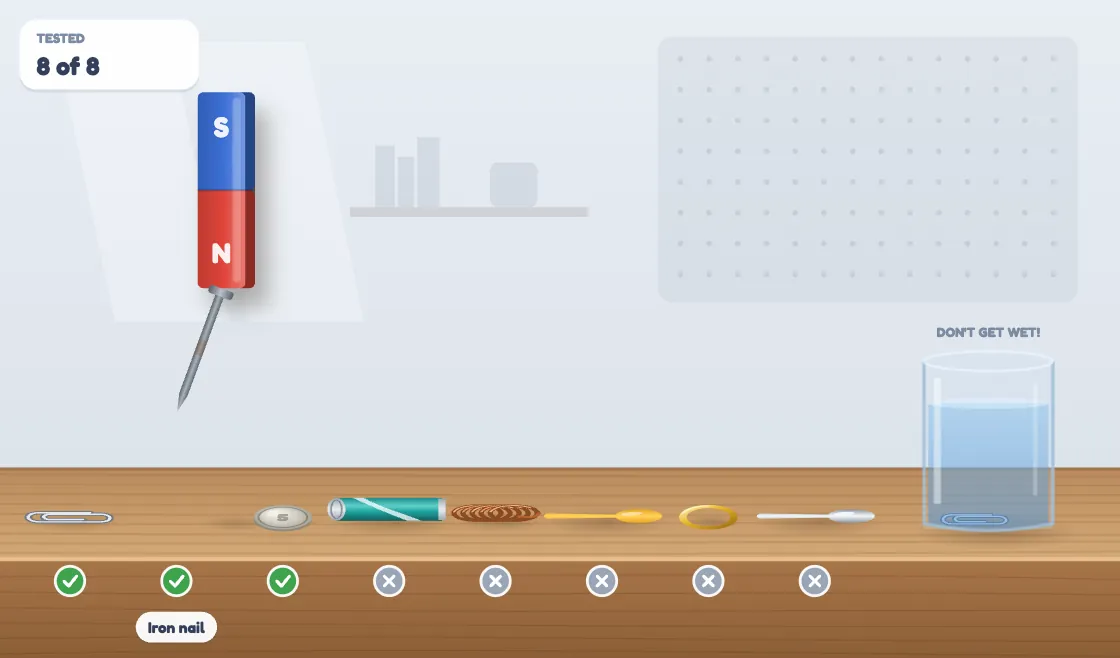
Magnetic materials
A magnet pulls on iron, nickel and cobalt, and on most kinds of steel (which is mostly iron). Most metals aren't magnetic at all: copper, aluminium, gold and silver aren't pulled, and nor are plastic, wood or glass.
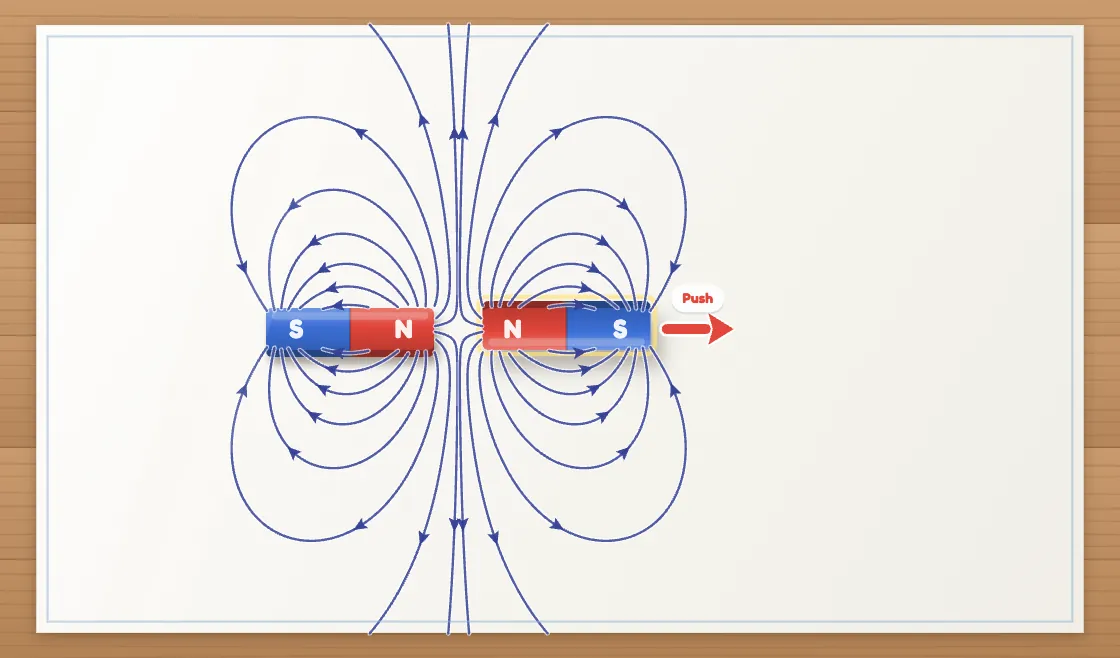
Poles
A magnet's pull is strongest at its two ends, the poles: a north pole and a south pole. Two like poles push each other away; a north and a south pull together. Cut a magnet in half and you get two magnets, each with both poles.
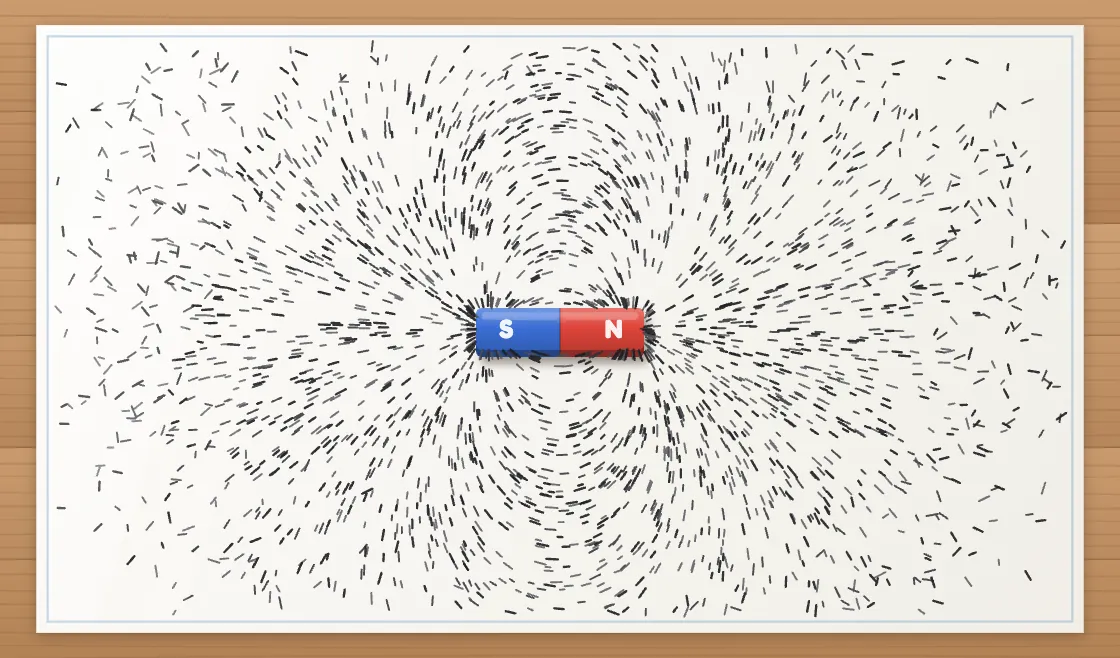
A magnetic field
The space around a magnet where it pushes or pulls is its magnetic field. It works without touching, and through paper, water and glass. Iron filings show its shape: each one turns to lie along the field.
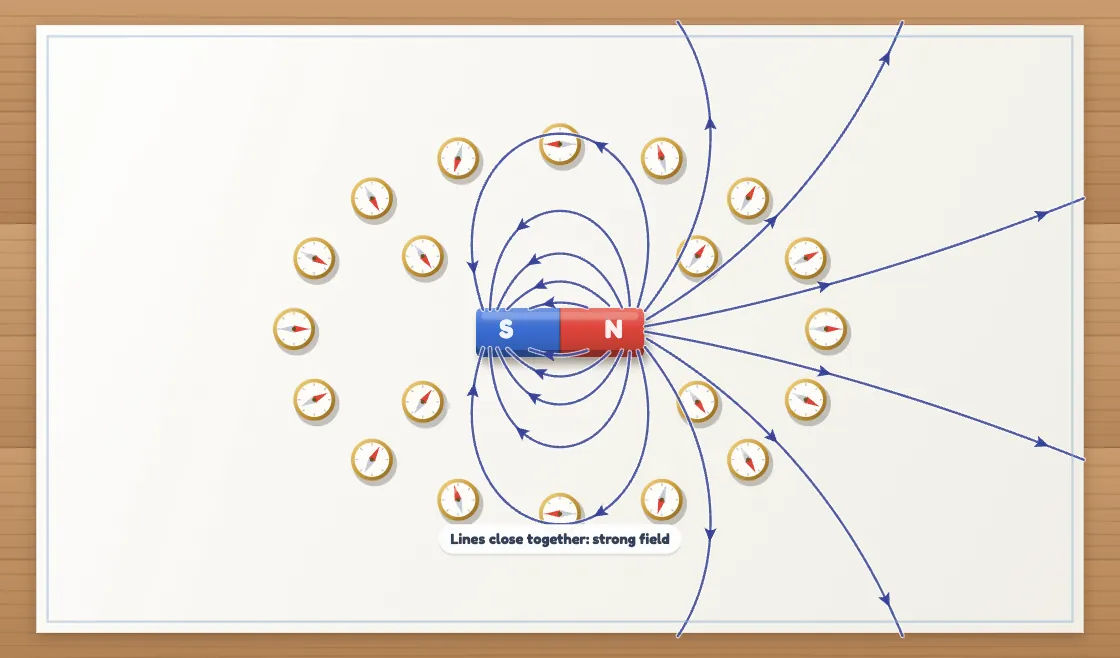
Field lines
We draw a field with lines that run from the north pole round to the south pole. A plotting compass points along them. Where the lines are closest together, at the poles, the field is strongest.
Making a magnet
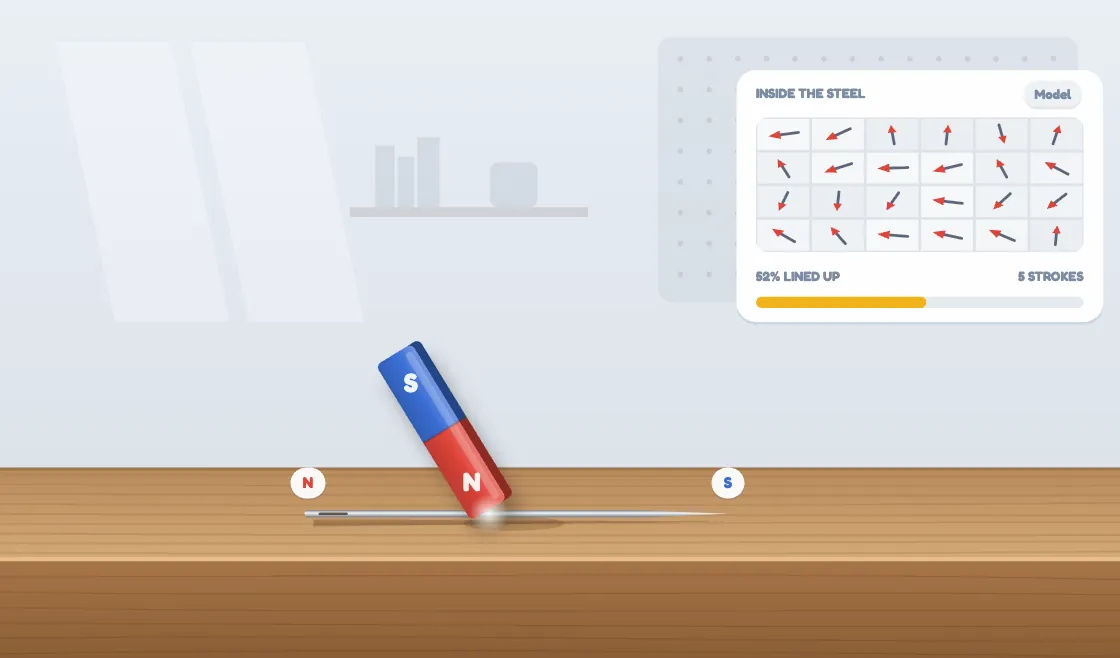
Steel is full of tiny magnetic regions pointing every way. Stroke it again and again in one direction with a magnet and more of them line up: it becomes a permanent magnet. A paper clip touching a magnet becomes a magnet too, but only while it's there: that's induced magnetism.
The Earth's magnetic field
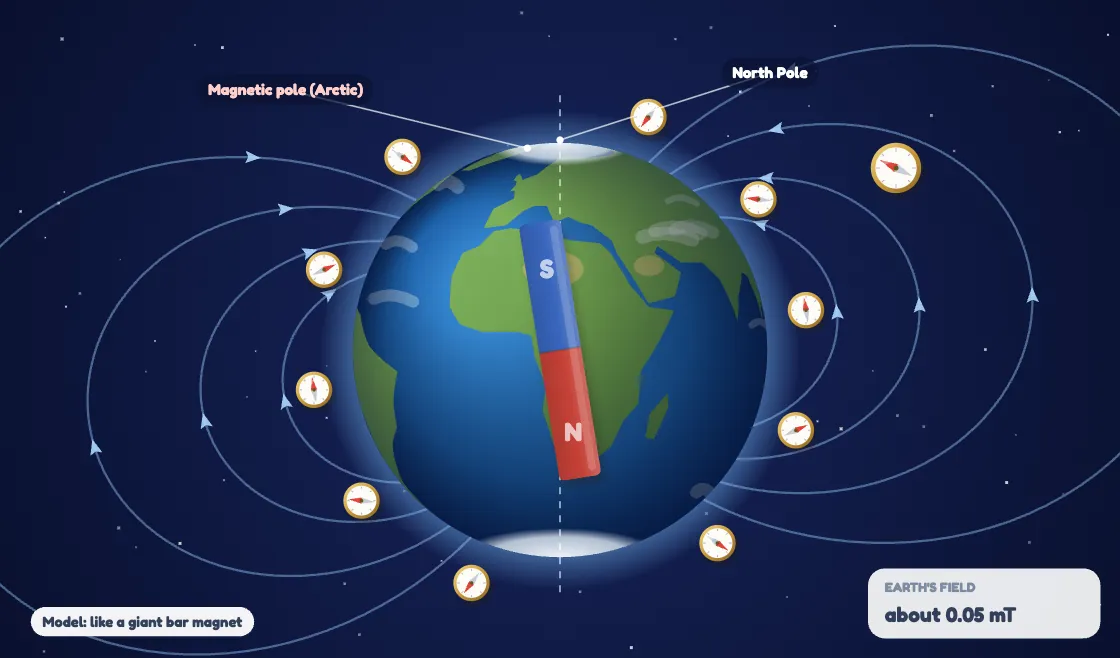
The Earth's field is like a giant bar magnet's, about 0.05 mT at the surface. A compass's north pole points towards the magnetic pole in the Arctic, so that pole is really a south pole. It isn't quite at the North Pole, and it slowly moves.
Inside the lab
8 missions in 4 parts: What sticks?, Fields and poles, Make a compass, Bonus. Each one is something to try for yourself, with the science behind it once you’ve done it.
- What sticks?Test all eight things on the table with the magnet.Only iron, nickel, cobalt and most kinds of steel are magnetic. Being a metal isn't enough: copper, aluminium and gold aren't pulled at all.
- Don't get wetGet the paper clip out of the glass of water without touching the water.A magnet's pull reaches through glass, water, paper and card. That's how a magnet on a fridge holds a sheet of paper.
- Push and snapPush two north poles together, then let a north and a south snap together.Every magnet has a north pole and a south pole. Like poles repel; unlike poles attract.
- Iron filingsSprinkle iron filings over a single magnet and let them settle.Each tiny filing becomes a little magnet and turns to lie along the field. They crowd at the poles, where the field is strongest.
- Magnetise a needleStroke the steel needle with the magnet until it's at least 80% magnetised.Steel is full of tiny magnetic regions. Stroking it the same way, again and again, turns more and more of them to point the same way, so the needle becomes a magnet.
- Find northFloat your magnetised needle on a cork and wait for it to point north.A magnet free to turn lines up with the Earth's magnetic field, so one end always swings to the north. That end is called the north-seeking pole, or north pole for short.
- Two-magnet fieldsSee the field between two magnets with north facing south, then with north facing north.North to south, the field lines run straight across the gap. North to north, they swerve away, and at one point in the middle the two fields cancel out.
- The Earth's magnetUse a magnet's south pole to pull your compass round, then zoom out to the Earth.The Earth acts like a giant magnet. A compass's north pole is pulled towards the Arctic, so the magnetic pole there is really a south pole.
How the quest works
- Predict. Coco asks the mystery and you lock in an answer.
- Learn. A short, picture-led story of the big ideas (6 slides).
- Experiment. 8 missions in the lab, each one yours to try.
- Final Challenge. 8 questions that check you can use what you found, then the mystery’s answer.
For teachers
Present it live on the board while your class follows on their own screens. It fits one class period: about 7 minutes of Learn, 24 in the lab and 6 for the Final Challenge.
Students can
- sort everyday objects into magnetic and non-magnetic, and explain that only iron, nickel, cobalt and most steels are attracted, not all metals.
- state that every magnet has a north and a south pole, that like poles repel and unlike poles attract, and that a magnet pulls through glass, water and paper without touching.
- describe the field round a bar magnet using iron filings and plotting compasses, and draw field lines from north to south, closest together at the poles.
- magnetise a steel needle by stroking it one way, use it as a floating compass, and explain why the magnetic pole in the Arctic is a south pole.
NGSS: 3-PS2-3, MS-PS2-3, MS-PS2-5.
Teacher notes for Magnet ExplorerQuestions people ask
What is Magnet Explorer?
Magnet Explorer is an interactive magnet and magnetic field simulation from Thinkodile for ages 11 to 14. Test what sticks, sprinkle iron filings to see a magnet's field, and turn a sewing needle into a compass that finds north. It opens with a mystery to predict, explains the big ideas in a short Learn story, lets you run the experiments yourself in the lab, and ends with a Final Challenge.
Is Magnet Explorer free?
Magnet Explorer is part of Thinkodile Plus for families and Teacher Pro for teachers. A free account includes 6 quests: Photosynthesis, Build a Cell, Build an Electromagnet, Particles in Motion, Dissolving, Moon Phases Explorer. A parent or teacher creates the account; children never sign up themselves.
How long does Magnet Explorer take?
About 37 minutes for a class working through it together: around 7 minutes for the Learn story, 24 in the lab and 6 for the Final Challenge. At home you can stop and pick it up again later.
Which curriculum does Magnet Explorer cover?
In the US it supports the Next Generation Science Standards 3-PS2-3, MS-PS2-3, MS-PS2-5. It's organised by topic, not by grade, so it fits other syllabuses too.
Does Magnet Explorer work on phones, tablets and Chromebooks?
Yes. It runs in the web browser on laptops, Chromebooks, tablets and phones, with nothing to install. On a phone the lab plays sideways, so turn the phone on its side.