
Invasion!An interactive invasive species simulation for ages 11 to 14
A species escapes a ship into a lake. Track it, predict the damage, and choose how to fight back.
Part of Thinkodile Plus · about 37 minutes · plays in the browser
The mystery
A few years after zebra mussels got into North America's Great Lakes, the water in some parts turned much clearer. What did that mean for the young fish?
Every quest starts with a prediction. Lock yours in, then run the experiments to find out who was right.
What you’ll learn
Stowaways
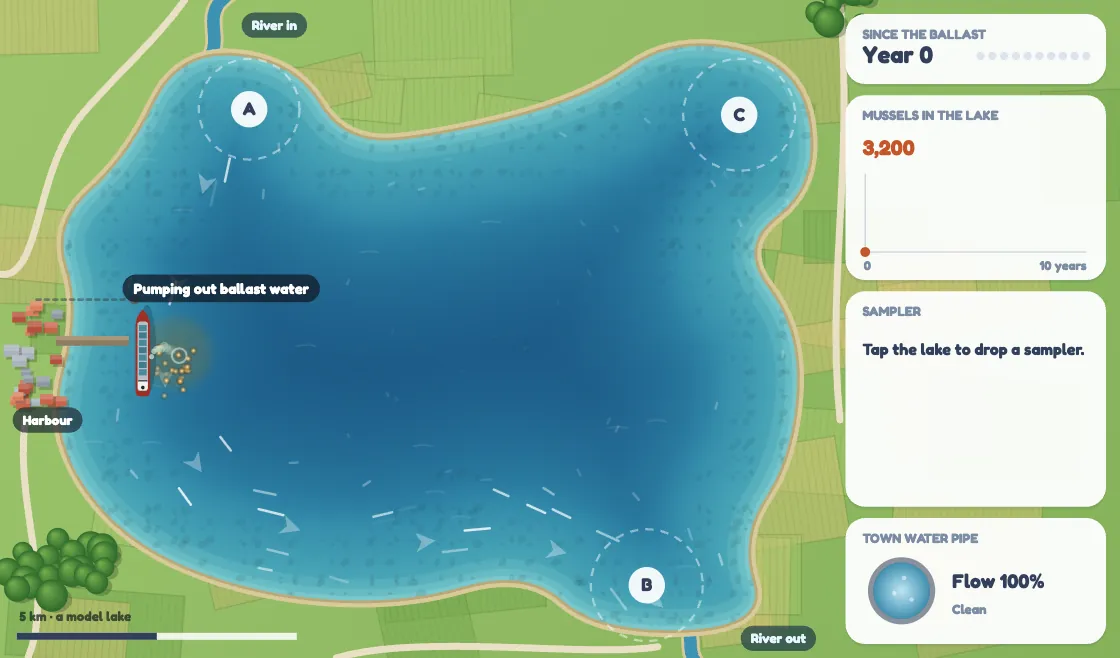
An introduced species is one that people have carried to a place where it never lived before. Ships pump out ballast water in port, with whatever lives in it. That's how zebra mussels reached North America's Great Lakes in the 1980s.
No enemies
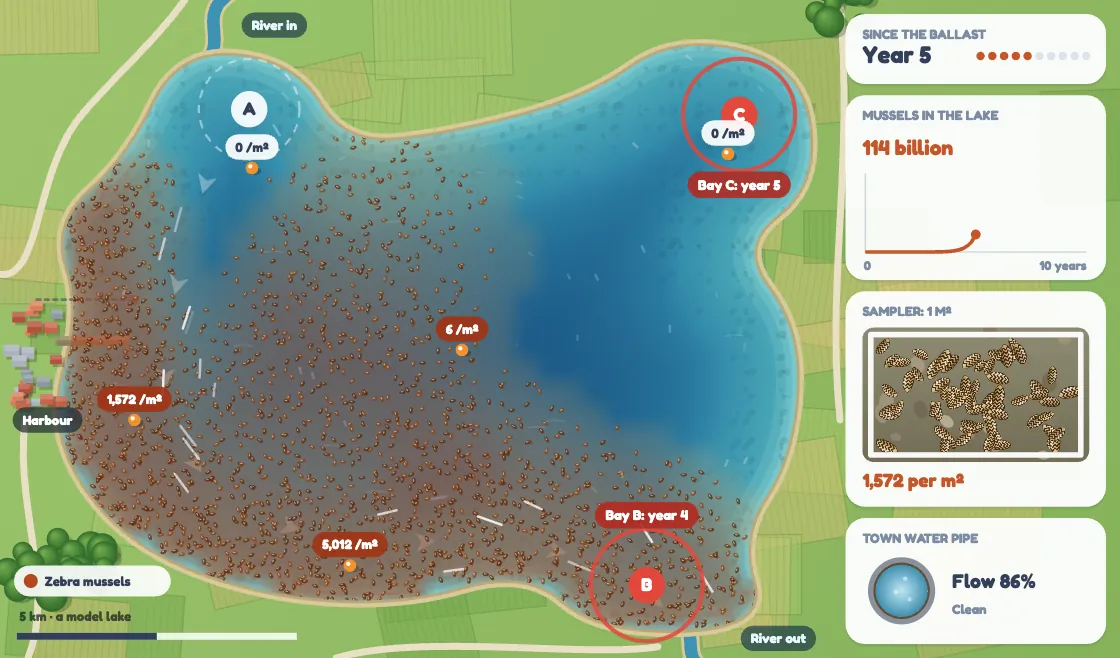
At home, a species is held back by predators, diseases and competitors. In a new place they may all be missing. Each female zebra mussel can lay up to a million eggs a year, and their young drift with the currents, so they spread fast.
Filter feeders
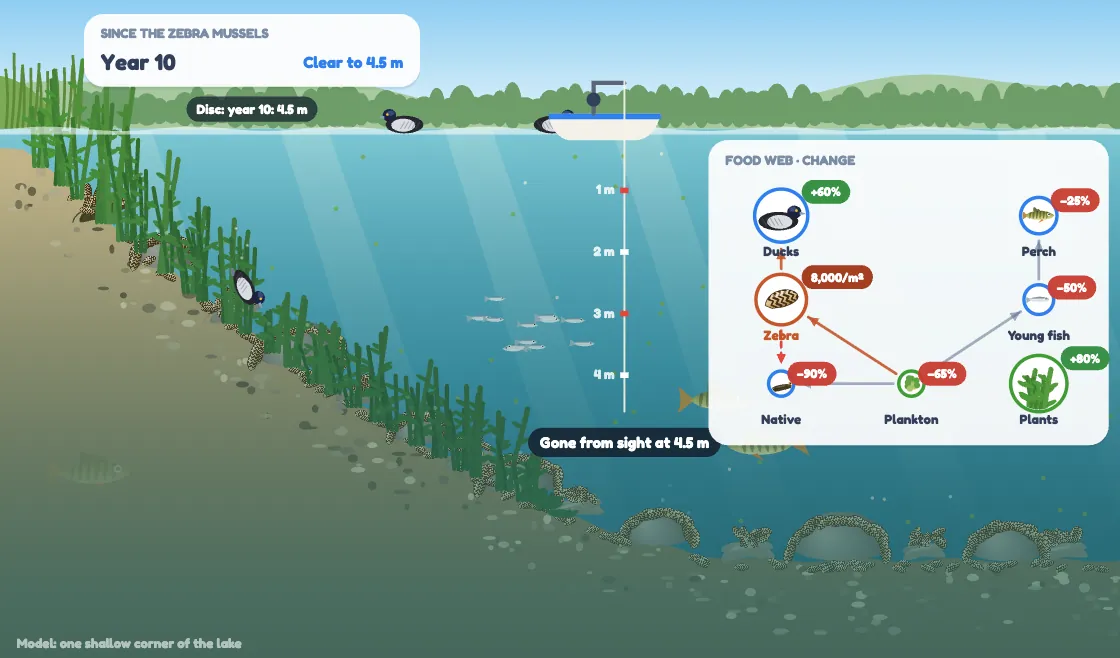
Each zebra mussel filters about a litre of water a day, eating the plankton in it. With thousands on every square metre, the water clears and the plankton runs short.
The ripple
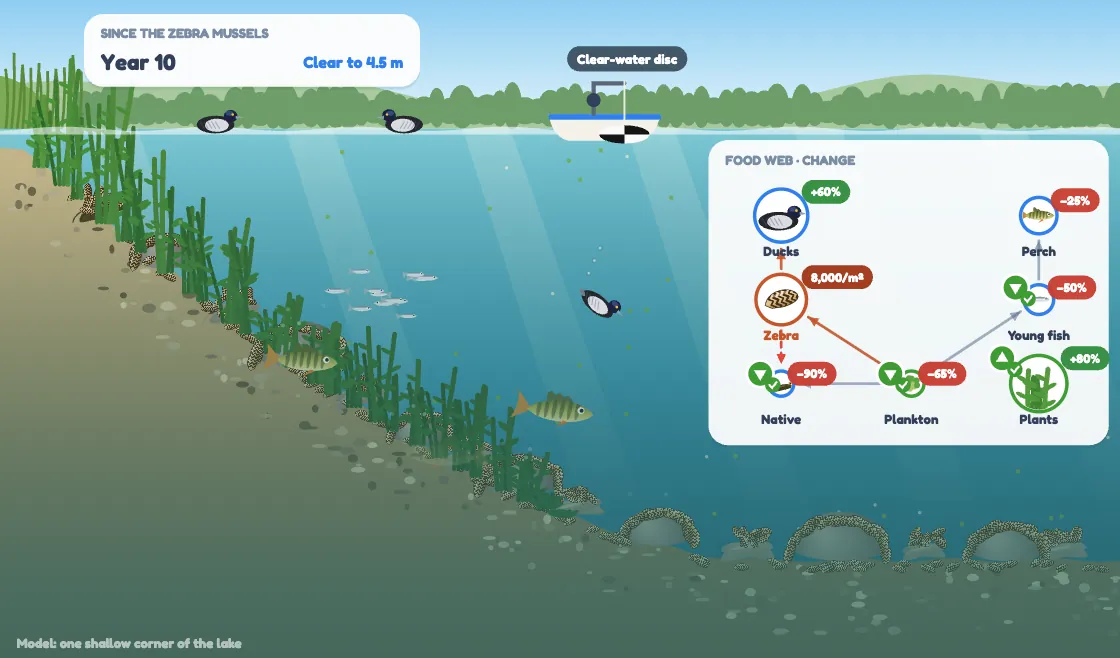
One change spreads through the whole food web. Animals that eat plankton, like young fish and native mussels, go short, and native mussels are smothered too. Clearer water lets light reach deeper, so water plants grow deeper.
Prevention first
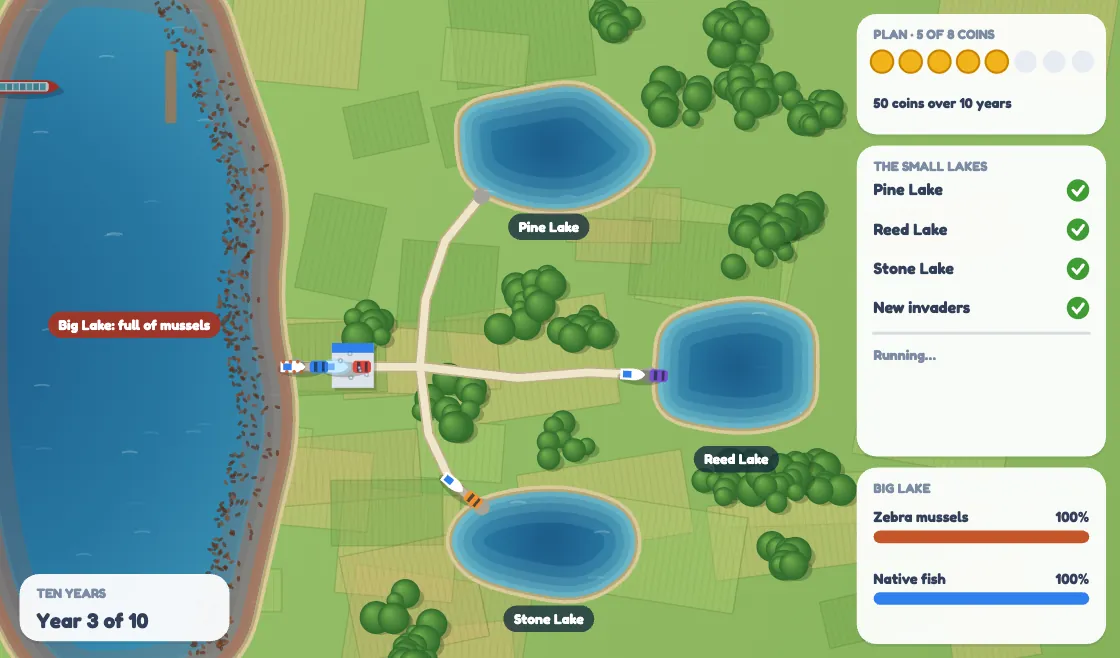
The cheapest way to fight an invader is to keep it out: check, clean and dry boats before they go to new water, and swap or treat ballast water before ships arrive. Early warning finds a new colony while it's small enough to clear.
Cures that backfire
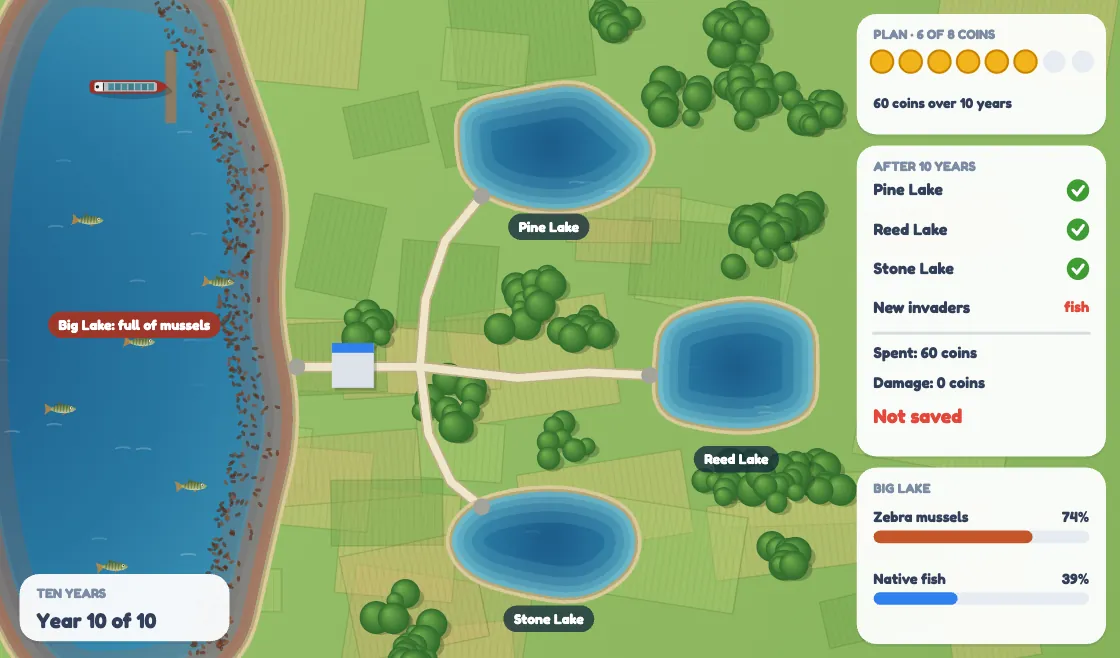
Bringing in a predator to eat an invader can make things worse. Cane toads were let loose in Australia in 1935 to eat beetles in the sugar cane. They hardly touched the beetles, spread across the north, and poison the animals that eat them.
Inside the lab
8 missions in 4 parts: The escape, The ripple, Fight back, Bonus. Each one is something to try for yourself, with the science behind it once you’ve done it.
- StowawaysEmpty the ship's ballast water, then find the mussels with the sampler.Ships carry water in their tanks to keep them steady, and pump it out in port with whatever lives in it. Zebra mussels reached North America's Great Lakes this way in the 1980s.
- Which way?Predict which bay the mussels will reach first, then run the years and see.Young zebra mussels drift in the water for weeks before they settle, so currents carry them a long way downstream.
- EverywhereKeep going until year 10.A female zebra mussel can lay up to a million eggs a year. They coat rocks, boats, other shells and the inside of water pipes.
- Clear waterMeasure how clear the water is with the disc, before the zebra mussels and ten years after.Each zebra mussel filters about a litre of water a day and eats the plankton in it. With thousands on every square metre, the water turns clear.
- The ripplePredict what happens to four living things, then run ten years.One change spreads through a food web. Less plankton means less food for young fish and native mussels. Clearer water lets light reach deeper, so water plants grow deeper.
- Save the lakesKeep all three small lakes free of mussels for ten years, with no new invaders.Keeping an invader out costs far less than fighting it afterwards. Boaters are asked to clean, drain and dry their boats, and ships must swap or treat their ballast water.
- BackfireBring in the predator fish, run ten years, and watch the native fish.In 1935, cane toads were let loose in Australia to eat beetles in the sugar cane. They hardly touched the beetles, spread across the north, and poison the animals that try to eat them.
- Caught earlyFind a new colony in its first year and clear it, with early warning and divers.Removing an invader only works while it's still rare and in one small place. Once it's everywhere, it's almost impossible to get rid of.
How the quest works
- Predict. Coco asks the mystery and you lock in an answer.
- Learn. A short, picture-led story of the big ideas (6 slides).
- Experiment. 8 missions in the lab, each one yours to try.
- Final Challenge. 8 questions that check you can use what you found, then the mystery’s answer.
For teachers
Present it live on the board while your class follows on their own screens. It fits one class period: about 6 minutes of Learn, 24 in the lab and 7 for the Final Challenge.
Students can
- explain how a species is carried to a new place by people (in a ship's ballast water, on boats) and why it can spread fast there: plenty of food, huge numbers of young and no natural enemies.
- use sampling to track a population and predict where it will spread, using evidence such as water currents.
- trace how one change spreads through a food web: filter-feeding mussels clear the water and take the plankton that young fish and native mussels need.
- compare ways of tackling an invasive species and explain why prevention works best, why removal only works early, and why bringing in another species can backfire.
NGSS: MS-LS2-4, MS-LS2-5, HS-LS2-7, HS-LS2-6. NCERT: Class 8, ch. 12 How Nature Works in Harmony.
Teacher notes for Invasion!Questions people ask
What is Invasion!?
Invasion! is an interactive invasive species simulation from Thinkodile for ages 11 to 14. A species escapes a ship into a lake. Track it, predict the damage, and choose how to fight back. It opens with a mystery to predict, explains the big ideas in a short Learn story, lets you run the experiments yourself in the lab, and ends with a Final Challenge.
Is Invasion! free?
Invasion! is part of Thinkodile Plus for families and Teacher Pro for teachers. A free account includes 6 quests: Photosynthesis, Build a Cell, Build an Electromagnet, Particles in Motion, Dissolving, Moon Phases Explorer. A parent or teacher creates the account; children never sign up themselves.
How long does Invasion! take?
About 37 minutes for a class working through it together: around 6 minutes for the Learn story, 24 in the lab and 7 for the Final Challenge. At home you can stop and pick it up again later.
Which curriculum does Invasion! cover?
In the US it supports the Next Generation Science Standards MS-LS2-4, MS-LS2-5, HS-LS2-7, HS-LS2-6. In India it matches NCERT Class 8 Science, chapter 12: How Nature Works in Harmony. It's organised by topic, not by grade, so it fits other syllabuses too.
Does Invasion! work on phones, tablets and Chromebooks?
Yes. It runs in the web browser on laptops, Chromebooks, tablets and phones, with nothing to install. On a phone the lab plays sideways, so turn the phone on its side.
Keep exploring Ecosystems & Food Webs
- Build an Ecosystem: Bring a dry pond back to life. What does an ecosystem need to keep going?
- Food Web Challenge: Link who eats whom, then remove a species and watch the whole web react.
- Ecosystem Balance: Follow the chain of changes in a forest valley, then restore it.
- Predator–Prey Island: Let deer loose on an empty island, bring in the wolves, then keep them all alive for 50 years.
- Rot Lab: Bury an apple, a leaf and a crisp packet, then fast-forward a year with the fungi and worms.
- All of Ecosystems & Food Webs