
Plant cell vs animal cell: what's the difference?
Plant cell vs animal cell: plant cells have a stiff cell wall, chloroplasts and a large vacuole. Animal cells don't. Both have a nucleus and membrane.

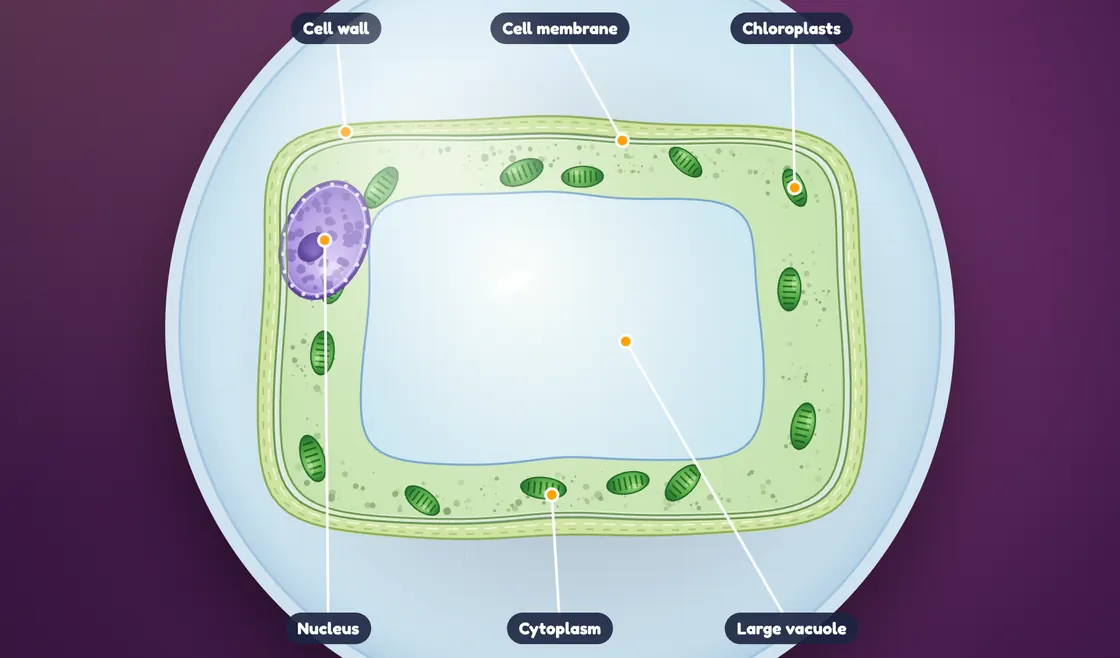
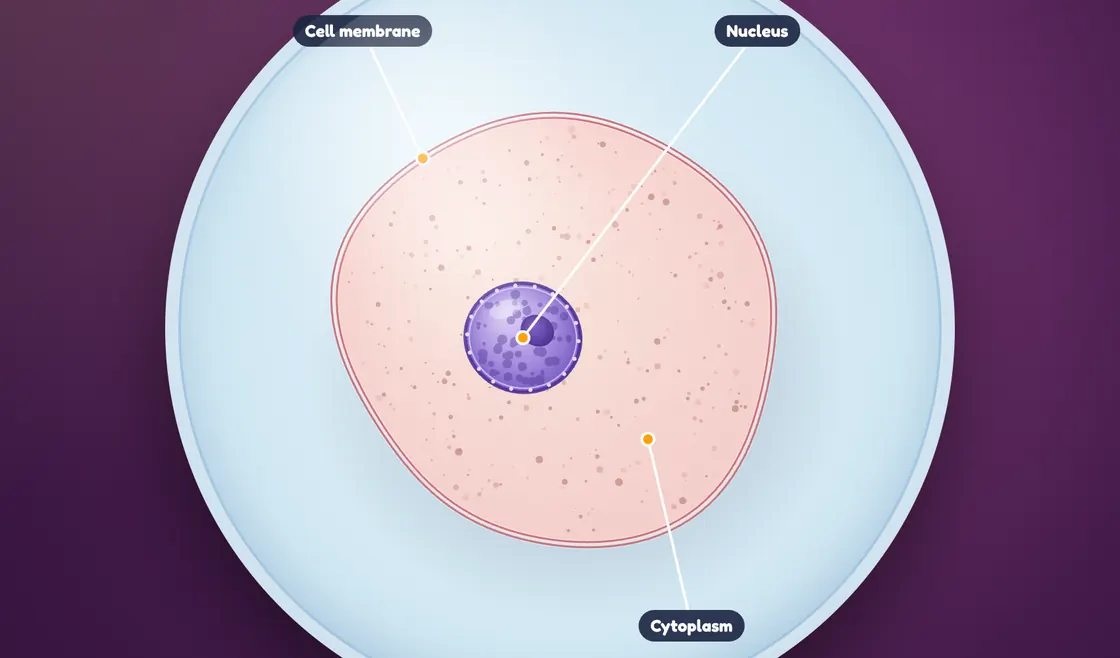
Plant cells have three things that animal cells don't: a stiff cell wall, chloroplasts and a large, permanent vacuole. Apart from that, they're built the same way. Both have a cell membrane, cytoplasm and a nucleus, and both have tiny mitochondria that release energy.
Those three extra parts explain most of what you see down a microscope. Plant cells tend to be neat, box-shaped and often green, while animal cells are softer, rounder and come in all sorts of shapes.
What's the difference between plant and animal cells?
- Cell wall. A plant cell has a stiff wall made of cellulose outside its membrane. It supports the cell and gives it a fixed shape. Animal cells have no cell wall.
- Chloroplasts. Many plant cells, especially in leaves, contain chloroplasts, where photosynthesis makes the plant's food. Animal cells have none, because animals get their food by eating.
- Large vacuole. A plant cell has one big, permanent vacuole full of watery cell sap, which keeps the cell firm. Animal cells only have small, temporary vacuoles, if any.
- Shape. Because of their walls, plant cells usually have regular, box-like shapes. Animal cells have many different shapes, from round to long and thin.
- Size. Plant cells are often bigger: typically about 10 to 100 micrometres across, compared with about 10 to 30 micrometres for animal cells. A micrometre is a thousandth of a millimetre.
- Food store. Plant cells store food as starch, and animal cells store it as glycogen.
What do plant and animal cells have in common?
Plant and animal cells share the parts that keep any cell alive:
- Cell membrane: a thin boundary that controls what goes in and out.
- Cytoplasm: the jelly that fills the cell, where many of its chemical reactions happen.
- Nucleus: the control centre, holding the cell's genetic information.
- Mitochondria: where respiration releases energy from food.
- Ribosomes: where the cell makes proteins.
With a school microscope you can usually see the membrane, cytoplasm and nucleus. Mitochondria are much harder to see, and ribosomes are far too small without an electron microscope.
A plant and animal cell Venn diagram, in words
If you're drawing a Venn diagram of plant and animal cells, this is what goes where:
- Only in plant cells: cell wall, chloroplasts, large permanent vacuole.
- In both: cell membrane, cytoplasm, nucleus, mitochondria, ribosomes.
- Only in animal cells: no big parts at this level. Animal cells just lack the plant extras, though they can have small, temporary vacuoles.
Do animal cells have a cell wall?
No. An animal cell is held in only by its thin, flexible membrane. That's why animal cells can take so many shapes, and why some of them can change shape: red blood cells bend to squeeze through the narrowest blood vessels, and some white blood cells creep around to swallow germs.
Animals don't need cell walls for support, because they have other ways of holding their shape, such as skeletons. Plants have no skeleton, so millions of stiff cell walls, plus the push of water inside each cell, hold them up.
Plants aren't the only living things with cell walls. Fungi and bacteria have them too, but made of different materials.
What does a vacuole do in a plant cell?
The large vacuole stores cell sap: water with sugars and salts dissolved in it. When it's full, it pushes the cytoplasm out against the cell wall, like air in a ball, and makes the cell firm. Firm cells keep leaves and stems upright.
When a plant loses more water than its roots can take up, the vacuoles shrink, the cells go soft, and the plant wilts. Water it, and the vacuoles fill up again. You can read more about how water travels up a plant.
What do chloroplasts do?
Chloroplasts make food for the plant by photosynthesis. They're full of chlorophyll, a green pigment that absorbs light, and they use that light energy to turn carbon dioxide and water into glucose, giving out oxygen.
Not every plant cell has them, though. Cells that never see light, like those in roots or an onion bulb, have no chloroplasts. So "a plant cell without chloroplasts" isn't a mistake: it depends where in the plant it comes from.
Plant cell vs animal cell vs bacterial cell
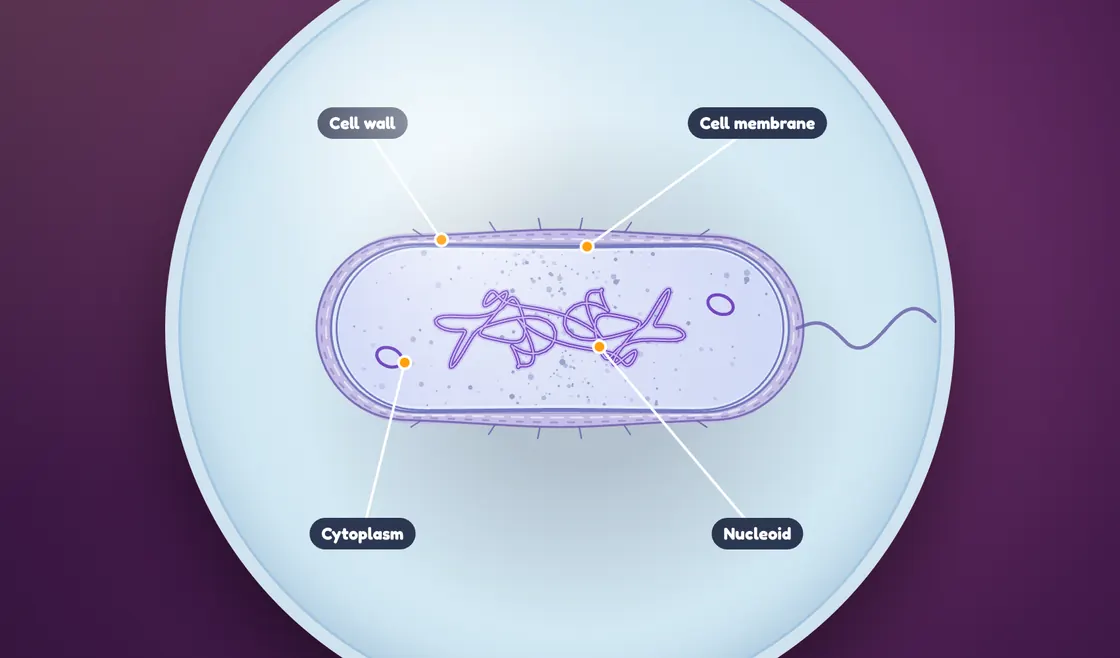
Bacteria are a third kind of cell, and they're simpler than both. A bacterium has a cell wall, a cell membrane and cytoplasm, but no nucleus. Its genetic material is a loop that sits loose in the cytoplasm, in an area called the nucleoid, and many bacteria also carry small extra rings of genetic material called plasmids.
Bacteria are also much smaller: most are only a few micrometres long, so dozens could line up across one plant cell. They have no chloroplasts, and they aren't plants or animals.
Plant cell vs animal cell under the microscope
Two classic school slides show the difference well.
- Onion skin. The thin skin from inside an onion layer shows plant cells packed like bricks, each with a clear wall. A drop of iodine solution stains the nuclei so they stand out. You won't see chloroplasts, because an onion bulb grows underground. For green chloroplasts, look at a pondweed or moss leaf instead.
- Cheek cells. Cells gently scraped from the inside of the cheek are flat, irregular and loosely scattered, with no walls. A blue stain called methylene blue shows each nucleus.
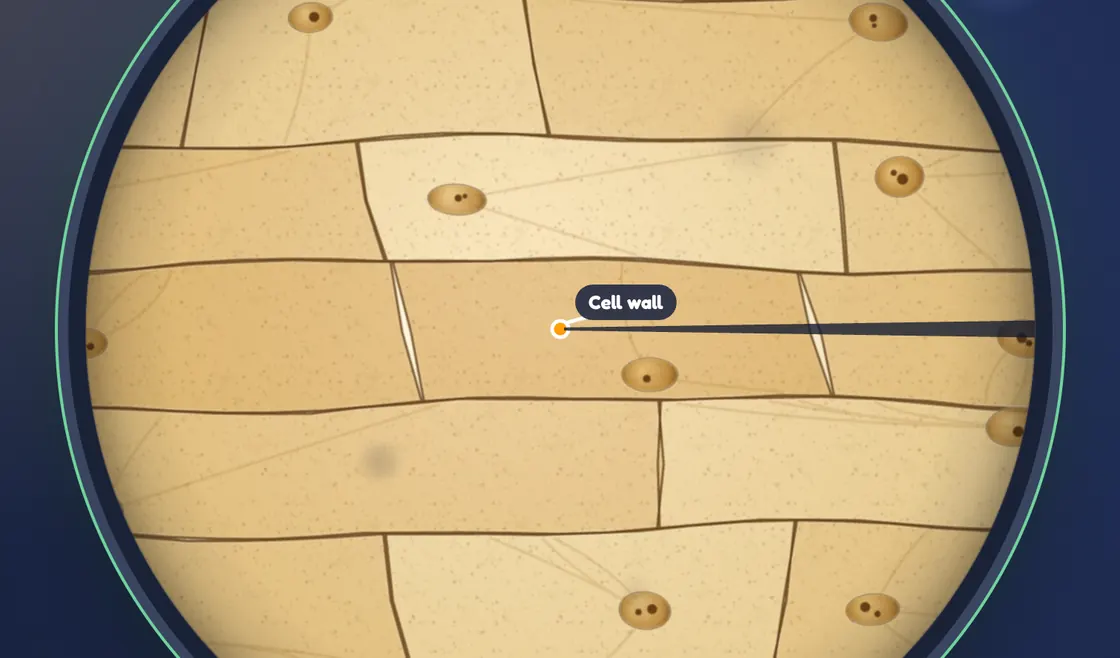
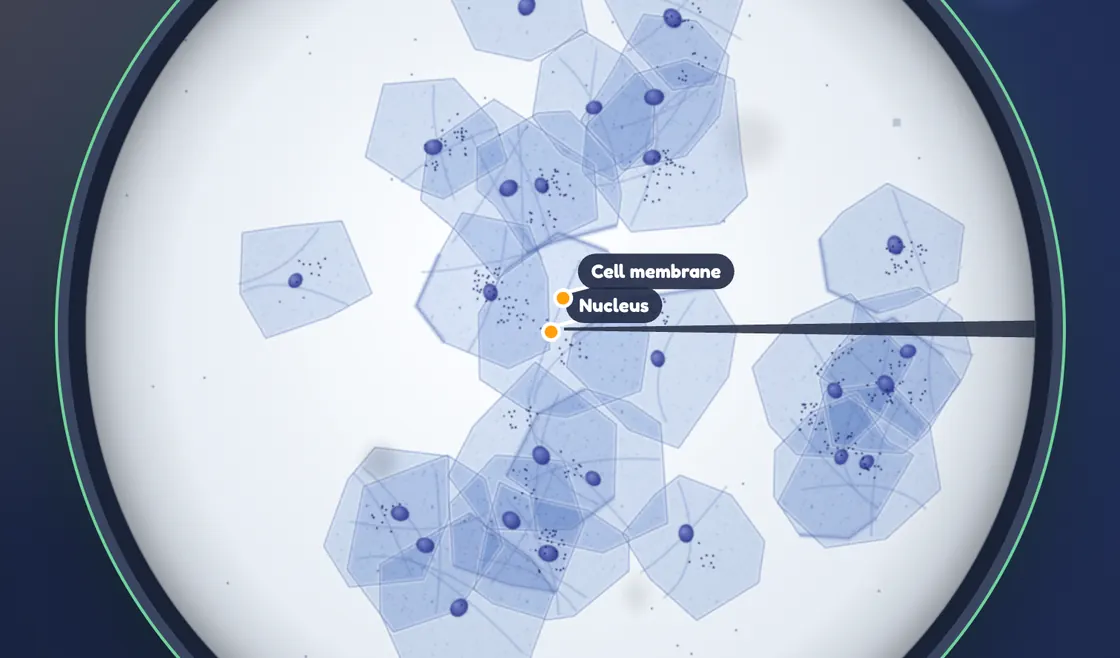
You can try both slides on screen in the Microscope quest.
Not every cell looks like the textbook diagram
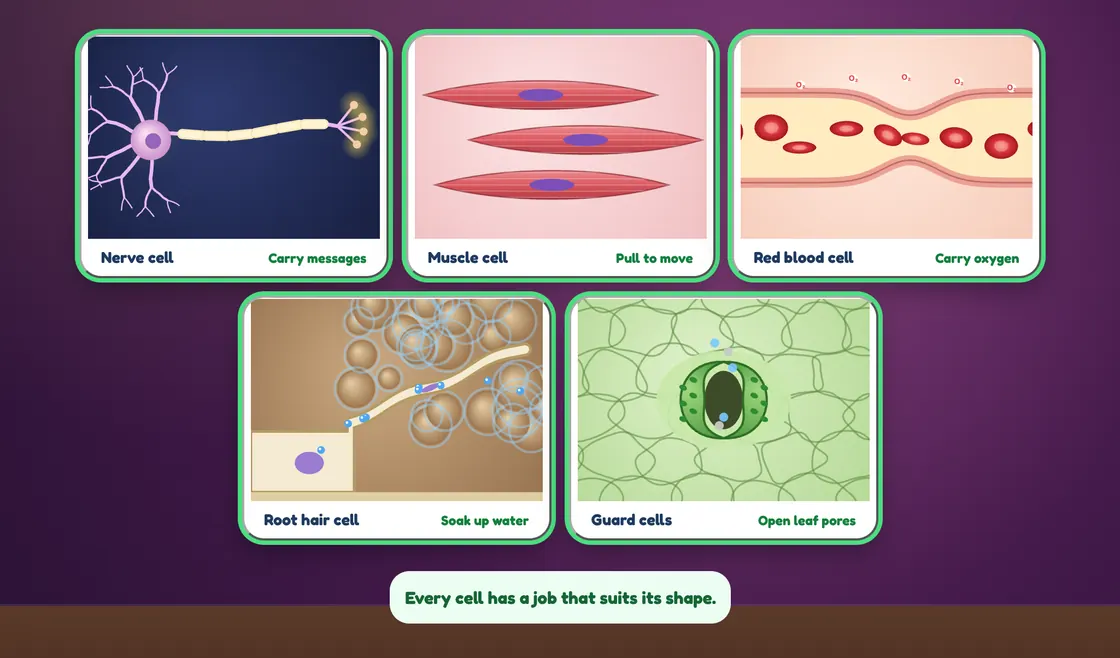
The plant and animal cells in diagrams are typical cells. Real cells change shape to suit their jobs, a process called specialisation.
- Nerve cells are long and branched, to carry messages a long way.
- Red blood cells are small, bendy discs that carry oxygen. In humans and other mammals, a mature red blood cell has no nucleus at all, which leaves more room for oxygen.
- Root hair cells have a long hair that reaches between soil grains to soak up water, and no chloroplasts.
- Guard cells come in pairs around tiny leaf pores, and they do have chloroplasts.
Similar cells work together as tissues, tissues make organs, and organs work together as organ systems.
Try it: model a plant cell and an animal cell
You'll need two clear sandwich bags, some clear hair gel (or just water), two grapes, a few peas, a small balloon and a small plastic food box.
- Animal cell. Fill one bag with gel (the cytoplasm), add a grape (the nucleus) and seal it. The bag is the cell membrane.
- Plant cell. Fill the second bag the same way and add a grape. Then add a few peas for chloroplasts and a small balloon filled with water for the large vacuole. Seal it and put it inside the box: the box is the cell wall.
- Compare. Gently press each model. The animal cell squashes into a new shape. The plant cell keeps its shape, because the box holds it, just as a cell wall does.
Stay safe: don't eat anything after it's been used in the models, and keep balloons away from young children.
Who discovered cells?
The English scientist Robert Hooke named them in 1665. Looking at a thin slice of cork through his microscope, he saw a honeycomb of tiny boxes that reminded him of the small rooms, or cells, that monks lived in. In fact, he was seeing the empty walls of dead plant cells. It took nearly 200 more years for scientists to agree that all living things are made of cells.
In the Build a Cell quest, which is one of the six quests on Thinkodile's free plan, you can build plant, animal and bacterial cells part by part (any part that doesn't belong bounces out), match five specialised cells to their jobs, and put cells, tissues, organs and organ systems in order.
In short
- Plant cells have a cell wall, chloroplasts and a large permanent vacuole. Animal cells have none of these.
- Both have a cell membrane, cytoplasm, a nucleus, mitochondria and ribosomes.
- The cell wall gives plant cells a fixed, box-like shape; animal cells can take many shapes.
- Chloroplasts make food by photosynthesis, and the vacuole keeps the cell firm. Not every plant cell has chloroplasts.
- Bacteria are a third kind of cell: a cell wall but no nucleus, and much smaller.
Questions people ask
What are three differences between plant and animal cells?
Plant cells have a cell wall, chloroplasts and a large permanent vacuole, and animal cells don't. The cell wall gives a plant cell a fixed, box-like shape and support. Chloroplasts make food by photosynthesis. The vacuole stores watery cell sap and keeps the cell firm. Plant cells are also usually larger and more regular in shape.
Do all plant cells have chloroplasts?
No. Chloroplasts are found in the parts of a plant that get light, especially leaves and green stems. Cells that never see light, such as root cells and the cells of an onion bulb, have none. That's why onion skin cells under a microscope look colourless, even though they're plant cells with cell walls and large vacuoles.
Do all animal cells have a nucleus?
Almost all do, but there's a famous exception. In humans and other mammals, mature red blood cells lose their nucleus as they develop. That leaves more room for haemoglobin, the substance that carries oxygen, and helps the cells stay small and bendy enough to squeeze through the narrowest blood vessels.
Why don't animal cells need a cell wall?
Because animals hold their shape in other ways, for example with a skeleton, and because many animal cells need to be flexible. Red blood cells bend through tiny blood vessels, and some white blood cells change shape to swallow germs. Plants have no skeleton, so they rely on stiff cell walls and firm, water-filled cells to stand up.
Is a bacterial cell a plant cell or an animal cell?
Neither. Bacteria are a separate kind of living thing. A bacterial cell has a cell wall like a plant cell, but no nucleus: its genetic material sits loose in the cytoplasm. It has no chloroplasts and no large vacuole, and it's much smaller, usually just a few micrometres long, far smaller than a typical plant or animal cell.


